Schengen Visa from Pakistan: Complete Application Guide
Schengen Visa from Pakistan: Complete Guide for Pakistani Travelers
Planning a trip to Europe sounds exciting until you start thinking about visas, documents, appointments, travel plans, and embassy requirements. If you’re preparing for a European holiday, visiting family, attending an event, or exploring several European countries, understanding the visa process before you apply can save you from avoidable mistakes.
For Pakistani travelers, the application process needs careful preparation because your documents should clearly support your travel purpose, financial circumstances, accommodation plans, employment or business situation, and intention to return to Pakistan after the trip. A strong application isn’t about submitting the largest possible file. It’s about presenting genuine information in a clear and consistent way.
This guide explains the Schengen visa from Pakistan process from start to finish. You’ll learn what a Schengen visa is, who needs one, how to choose the correct country for your application, what documents are commonly required, how appointments work, how to prepare financial evidence, what mistakes to avoid, and how to organize your application professionally.
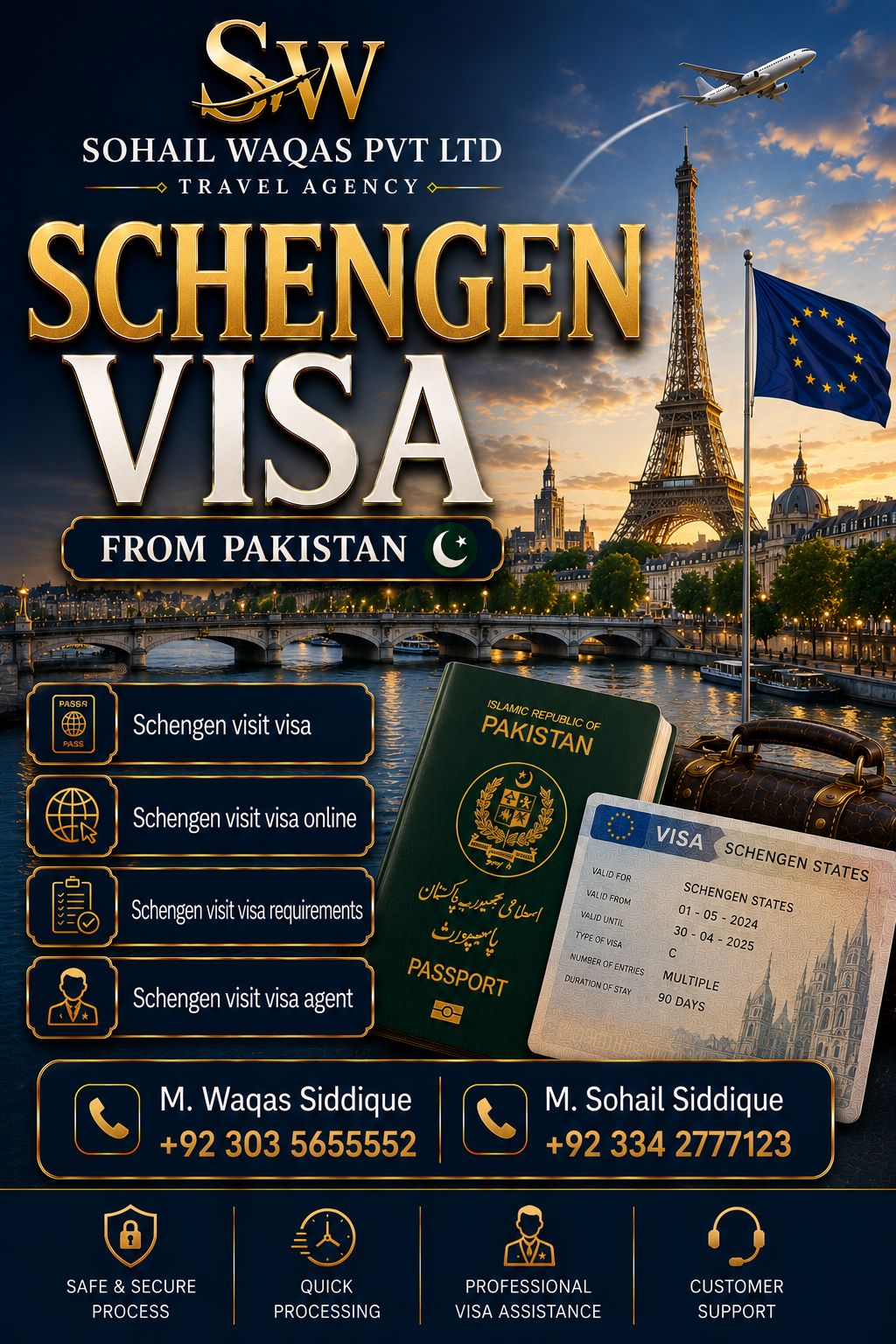
What Is a Schengen Visa?
A Schengen visa is a short-stay visa that can allow eligible travelers to visit countries within the Schengen Area for a temporary period, subject to the visa issued and its conditions. The Schengen Area includes many European countries that have removed routine internal border controls between participating states.
This makes the visa particularly useful for travelers who want to visit multiple Schengen countries during one journey. For example, you might plan a trip covering France, Italy, Switzerland, and Germany rather than applying separately for a traditional tourist visa for every country.
However, having a Schengen visa doesn’t mean you can ignore the conditions printed on the visa or the applicable immigration rules. Your application should accurately reflect your intended journey.
Who Needs a Schengen Visa from Pakistan?
Pakistani passport holders generally need an appropriate visa before traveling to the Schengen Area for a short visit, unless a specific exemption applies to their circumstances.
People commonly apply for short-stay travel for reasons such as:
-
Tourism and sightseeing
-
Visiting family or friends
-
Attending conferences or business meetings
-
Participating in events
-
Short cultural trips
-
Visiting multiple European destinations
-
Certain short-term professional activities permitted under the relevant rules
Your purpose matters because the supporting evidence should match it. A tourist application should look like a genuine tourism application, while a family visit or business trip may require different supporting documents.

Which Schengen Country Should You Apply Through?
This is one of the most important points to understand before starting your application.
You shouldn’t simply choose an embassy because you think that country’s visa process will be easier. The appropriate country generally depends on your actual travel itinerary and the applicable Schengen rules.
If you’re visiting only one Schengen country, that country will normally be central to your application. If you’re visiting several countries, the main destination rules generally become important. The length and purpose of your stay in each country can affect where you should submit your application.
For example, imagine you’re planning a 12-day European trip:
-
France: 5 days
-
Italy: 4 days
-
Switzerland: 3 days
France would be your main destination based on the planned stay, so you would normally look at the applicable French Schengen application procedure.
Here’s what most applicants miss: don’t build an itinerary around the embassy you prefer. Build your itinerary around your genuine travel plans and then determine the correct application route.
Types of Schengen Visas
The most common short-stay Schengen visa is associated with temporary visits within the permitted framework. Depending on the applicant’s purpose and circumstances, different visa categories and conditions can apply.
Common travel purposes include:
Tourist Travel
This is suitable for applicants whose main purpose is sightseeing, holidays, and leisure travel.
Family or Friend Visit
If you’re traveling to visit relatives or friends, your supporting documents may include evidence concerning your relationship, accommodation, invitation, and the purpose of the visit.
Business Travel
Applicants traveling for eligible business activities may need supporting documents from their employer and the organization or business they intend to visit.
Airport Transit
An airport transit visa is different from an ordinary tourist visa. It applies to specific transit situations and doesn’t generally provide the same permission as a standard short-stay visa.
Always select the category that genuinely matches your purpose.
Schengen Visa Requirements for Pakistani Applicants
Requirements can vary according to the destination country, visa category, personal circumstances, and current application rules. Still, most applicants should expect to prepare evidence across several areas.
Valid Passport
Your passport should meet the relevant validity and blank-page requirements for the application you’re making.
Check your passport carefully before starting:
-
Name spelling
-
Date of birth
-
Passport number
-
Expiry date
-
Previous visas and travel records
If you’ve held previous passports with useful travel history, check whether those records should also be included according to the application instructions.
Visa Application Form
The application form should be completed accurately and consistently.
Don’t guess an answer simply because you’re unsure. Review the relevant instructions and make sure information in the form matches your supporting documents.
Even small differences in dates, employment details, or travel plans can create unnecessary questions.
Photographs
Applicants may need recent photographs that meet the required specifications.
Don’t assume that an ordinary passport-style photo will automatically meet every requirement. Follow the specifications provided for your application.
Travel Medical Insurance
Schengen applications generally involve specific travel medical insurance requirements. The policy should meet the applicable rules for the territory and duration of your planned trip.
Check the current requirements before purchasing or submitting insurance documentation.
Proof of Accommodation
You should be able to explain where you’ll stay during your trip.
Depending on your circumstances, this may involve:
-
Hotel reservation information
-
Accommodation arranged by a host
-
Relevant invitation or supporting documents
-
Other acceptable accommodation evidence
Your accommodation information should make sense alongside your itinerary.
Flight or Travel Reservation Information
Applicants may need evidence related to their intended travel arrangements.
Your proposed journey should be realistic and consistent with the dates stated in the application.
Avoid creating an unnecessarily complicated itinerary simply to make the application appear more impressive.
Proof of Financial Means
Financial evidence helps demonstrate that you can support yourself during the proposed visit.
Documents may include:
-
Bank statements
-
Salary evidence
-
Employment records
-
Business income documentation
-
Other legitimate financial evidence
The focus shouldn’t be on showing an artificial financial picture. Your evidence should reflect your genuine financial circumstances.
Employment Evidence
If you’re employed in Pakistan, relevant evidence can help demonstrate your professional connection to your home country.
Depending on your circumstances, this may include:
-
Employment certificate
-
Job position
-
Length of employment
-
Approved leave
-
Salary evidence
-
Employer contact information where required
An applicant who has a stable job and approved leave may have a clearer explanation for returning to Pakistan after a temporary trip.
Business Evidence
Business owners can provide genuine evidence showing their ongoing business responsibilities.
This could include relevant registration documents, business records, tax documentation, or other evidence appropriate to the applicant’s circumstances.
Family and Personal Documents
Depending on the application, documents relating to your family or personal circumstances may be relevant.
These can help explain your connections to Pakistan and provide context for the trip.
Schengen Visa Document Checklist
A useful way to organize your application is to divide documents into categories rather than keeping everything in one large folder.
| Document Category | Common Examples | Main Purpose |
|---|---|---|
| Identity | Passport, identity documents | Establishes personal identity |
| Application | Visa form, photographs | Completes the formal application |
| Employment | Employer letter, leave approval | Supports employment ties |
| Business | Registration and business records | Supports business circumstances |
| Finance | Bank statements, income evidence | Shows financial circumstances |
| Travel | Itinerary, travel arrangements | Explains the proposed journey |
| Accommodation | Hotel or host documentation | Shows where you’ll stay |
| Insurance | Travel medical insurance | Meets applicable insurance requirements |
| Family | Relevant civil documents | Supports personal circumstances |
| Travel history | Previous visas and travel records | Provides additional background |
| Not every applicant will need exactly the same documents. The correct checklist depends on the country you’re applying through and your individual circumstances. |
How to Apply for a Schengen Visa from Pakistan
Once you understand the requirements, the process becomes much easier to manage.
Step 1: Decide Your Genuine Travel Purpose
Start by defining why you want to travel.
Are you going for:
-
Tourism?
-
Family visitation?
-
Business?
-
An event?
-
Another permitted short-stay purpose?
Your answer determines much of the evidence you’ll need.
Step 2: Build a Realistic Itinerary
Prepare a practical travel plan showing where you intend to go and approximately how long you’ll stay.
If you’re visiting several countries, make sure the sequence makes sense.
For example, a traveler planning Paris, Amsterdam, and Brussels might create a logical route rather than listing random cities across Europe with no clear connection.
Step 3: Identify the Correct Consulate or Application Center
Once your itinerary is ready, determine which country’s rules apply to your application.
The correct submission location isn’t something you should guess. Review the current instructions for your destination country and your particular visa category.
Step 4: Collect Your Supporting Documents
Gather your documents early.
Separate them into folders such as:
-
Personal documents
-
Financial evidence
-
Employment or business documents
-
Travel documents
-
Accommodation
-
Insurance
-
Additional supporting evidence
This makes your final review much easier.
Step 5: Complete the Application
Enter your information carefully.
Pay particular attention to:
-
Travel dates
-
Previous travel
-
Employment history
-
Family details
-
Accommodation
-
Purpose of travel
-
Intended destinations
A good rule is simple: if the information appears in another document, make sure the details don’t contradict it.
Step 6: Schedule Your Appointment
Depending on the destination and application system, applicants may need to book an appointment through the relevant visa application channel.
Appointments can be subject to availability, so planning ahead is sensible.
Step 7: Attend the Appointment
Bring the required documents and follow the instructions provided for your application.
Biometric information may be collected as part of the process where applicable.
Answer questions honestly and directly if you’re asked about your travel plans.
There’s no need to memorize a speech. You should simply understand your own application.
Step 8: Track and Respond
After submission, monitor communications relating to your application.
If additional information is requested, respond carefully and within the required timeframe.
How to Prepare Financial Evidence
Financial documentation is one of the areas where applicants often become confused.
Some people think the only goal is to show a large bank balance. That’s not the right approach.
A financial file should tell a believable story.
For example, imagine you earn a regular salary and your account shows normal monthly activity. That creates understandable financial context.
Now imagine a large unexplained deposit appears shortly before your application. Even if the final balance looks impressive, the transaction may create questions.
This doesn’t mean legitimate large transactions are automatically a problem. If there’s a genuine reason, provide appropriate supporting evidence or an explanation when relevant.
Your financial records should generally be consistent with:
-
Your income
-
Your employment or business
-
Your family circumstances
-
Your travel plans
-
The expected duration of the visit
Never create artificial financial evidence. Genuine records are much safer than documents prepared only to make an application look stronger.
How to Show Strong Ties to Pakistan
A temporary visitor needs a credible reason to return home after the trip.
Your circumstances may include several types of ties.
Employment Ties
A continuing job and approved leave can demonstrate an ongoing professional commitment.
Business Responsibilities
Business owners may have operations, clients, staff, or other responsibilities that require their return.
Family Connections
Close family responsibilities can form part of your overall personal circumstances.
Education
Students can show ongoing studies and academic commitments.
Property and Other Assets
Relevant property ownership or other legitimate assets may provide additional context.
Don’t treat one document as a magic solution. Your overall circumstances matter more than any single piece of evidence.
Visiting Family or Friends in Europe
A family or friend visit can require a slightly different preparation approach from a pure tourism application.
You should be able to explain:
-
Who you’re visiting
-
Your relationship with that person
-
Why you’re visiting
-
Where you’ll stay
-
How long you plan to remain
-
How the trip will be supported
-
Why you’ll return to Pakistan
If someone is providing accommodation or other support, make sure the relevant supporting evidence is included where required.
Be honest about your relationships. Trying to make a family visit look like something completely different can create inconsistencies.
Tourism Application: How to Build a Good Itinerary
A tourism itinerary doesn’t need to be complicated.
A simple plan is often easier to understand.
For example:
Day 1–4: Paris sightseeing and major attractions
Day 5–7: Brussels
Day 8–10: Amsterdam
Day 11: Return journey
The actual itinerary should reflect your intended trip. Don’t copy someone else’s plan just because it worked for them.
Your accommodation, travel dates, destinations, and purpose should all fit together.
Common Mistakes to Avoid
Even applicants with good circumstances can weaken their application through poor preparation.
Applying Through the Wrong Country
Don’t select an application destination simply because someone told you it’s easier.
Follow the rules based on your genuine itinerary and main destination.
Inconsistent Information
If your application says you’re self-employed but your documents indicate full-time employment, questions may arise.
Make sure your story is consistent.
Unexplained Bank Activity
Large or unusual transactions should not be ignored when they need context.
Provide genuine supporting information where appropriate.
Fake Documents
Never submit forged, altered, or misleading documents.
This can create serious immigration consequences and can be far more damaging than a weak application.
Unrealistic Travel Plans
A complicated itinerary isn’t automatically a better itinerary.
If you’re traveling for a short period, keep the plan practical.
Last-Minute Preparation
Waiting until the final days can leave you with incomplete paperwork or appointment problems.
Give yourself enough time to prepare.
Submitting Too Many Irrelevant Documents
A larger file isn’t necessarily a stronger file.
The goal is relevance, clarity, and credibility.
Benefits of Proper Visa Preparation
Taking the preparation stage seriously can provide several practical advantages.
Better Organization
You’ll know exactly where each document belongs.
Fewer Avoidable Errors
A detailed review can catch incorrect dates, missing information, and inconsistencies.
Clearer Travel Purpose
Your application becomes easier to understand.
Stronger Supporting Evidence
Relevant documents can provide a clearer picture of your circumstances.
Greater Confidence
When you know your own application well, you’re better prepared for questions during the appointment process.
Should You Apply Yourself or Get Professional Assistance?
Many applicants can prepare their own applications, especially when their circumstances are straightforward.
Professional assistance may be useful if your case is more complicated, such as:
-
Previous visa refusals
-
Complicated travel history
-
Unusual employment circumstances
-
Business ownership
-
Complex family circumstances
-
Large amounts of supporting documentation
-
Difficulty understanding application requirements
If you seek professional assistance, choose someone who emphasizes truthful documentation and accurate information.
Nobody can honestly guarantee that a visa will be approved. The final decision belongs to the relevant authorities.
How Early Should You Prepare?
Don’t leave your application until just before your planned departure.
Your preparation may involve several stages:
-
Decide your destination and travel purpose.
-
Build your itinerary.
-
Gather personal and financial documents.
-
Arrange supporting evidence.
-
Complete the application.
-
Book the required appointment.
-
Attend the appointment and provide biometrics if applicable.
-
Respond to any additional requests.
The actual timeline can vary, so check the current requirements for the country you’re applying through before making firm travel arrangements.
What Happens After You Submit?
After submission, your application is assessed according to the applicable rules and the evidence you provide.
You may receive a request for additional information depending on your case.
During this period:
-
Monitor your application status where available.
-
Check your communications regularly.
-
Respond to requests within the specified timeframe.
-
Keep copies of submitted documents.
-
Don’t provide contradictory information.
Processing times can vary, and one applicant’s experience shouldn’t be treated as a guaranteed timeline for another.
Can Previous Travel History Help?
Previous international travel can provide useful context in some applications.
If you’ve traveled abroad before and complied with the relevant visa conditions, that history may form part of the overall picture.
However, previous travel isn’t a guarantee of approval.
Likewise, having little or no international travel history doesn’t automatically make an applicant unsuitable.
What matters is the complete application and your genuine circumstances.
What If Your Schengen Visa Is Refused?
A refusal can be disappointing, but it doesn’t mean you should immediately submit the same application again.
First, understand the reason for the decision.
Look carefully at:
-
The refusal grounds
-
Missing or weak evidence
-
Questions about your travel purpose
-
Financial concerns
-
Concerns about your intention to return
-
Inconsistencies in the application
If you apply again, address the actual weaknesses rather than simply adding more random documents.
A stronger application is about better evidence and clearer explanations, not just a thicker file.
Practical Tips Before Submission
Use this final checklist before submitting your application.
Personal Information
-
Check your name against your passport.
-
Verify your date of birth.
-
Review passport details.
-
Confirm previous travel information.
Travel Plans
-
Make sure your itinerary is realistic.
-
Confirm your main destination.
-
Check that travel dates match across documents.
Financial Evidence
-
Provide genuine financial records.
-
Make sure income and account activity make sense together.
-
Explain relevant unusual transactions where necessary.
Employment or Business
-
Confirm your job or business information.
-
Include relevant supporting documents.
-
Provide leave evidence if appropriate.
Accommodation and Insurance
-
Check that accommodation information matches your itinerary.
-
Confirm that your travel medical insurance meets the applicable requirements.
Final Review
-
Check every form field.
-
Make sure documents are readable.
-
Remove irrelevant documents.
-
Don’t submit anything false or misleading.
What Makes an Application Look Credible?
A credible application usually has consistency at its core.
Imagine a Pakistani applicant who works at the same company for several years, has approved leave, maintains normal financial records, plans a clear European holiday, has suitable accommodation arrangements, and has strong personal commitments in Pakistan.
The documents support the same basic story.
Now imagine another application where the travel purpose changes between documents, the financial evidence contains unexplained activity, dates don’t match, and the itinerary seems unrealistic.
Even if the second applicant has more documents, the first application may be easier to understand.
That’s the difference between quantity and quality.
Final Thoughts
Preparing for a Schengen visa from Pakistan doesn’t have to be confusing when you approach it step by step. Start with your genuine travel purpose, identify the correct destination country, build a realistic itinerary, gather relevant documents, and make sure your financial, employment, family, and travel information tells one consistent story.
Don’t focus only on the visa form. Think about the complete picture you’re presenting.
Your passport establishes your identity. Your financial records explain your circumstances. Your employment or business documents show your ties. Your itinerary explains your journey. Your accommodation and insurance support the practical side of the trip.
When these pieces fit together naturally, your application becomes clearer and more professional.
If you’re preparing your European trip and want help organizing your application documents and understanding the preparation process, contact our visa assistance team for guidance.
4. FAQ Section
What is the Schengen visa application process from Pakistan?
The process generally involves choosing the correct destination country, preparing the required documents, completing the application, booking an appointment, providing biometrics where applicable, submitting the application, and responding to any additional requests.
Which Schengen country should Pakistani applicants apply to?
You should generally apply through the country responsible under the Schengen rules based on your genuine itinerary and main destination. If several countries are involved, the duration and purpose of your stay in each destination can determine the appropriate application route.
What documents are required for a Schengen visa from Pakistan?
Common documents include a valid passport, application form, photographs, travel medical insurance, accommodation evidence, travel information, financial documents, employment or business evidence, and other documents relevant to your personal circumstances.
How can I prove strong ties to Pakistan for a Schengen visa?
Employment, business responsibilities, family connections, education, property, and other genuine commitments can help explain your connection to Pakistan. The evidence should accurately represent your real circumstances.
Can I apply for a Schengen visa after a previous refusal?
A previous refusal doesn’t necessarily prevent you from making another application. However, you should understand the previous refusal reasons and address genuine weaknesses before submitting a new application.
How can I avoid mistakes in my Schengen visa application?
Review every detail for consistency, use genuine documents, prepare a realistic itinerary, provide relevant financial evidence, follow the correct application procedure, and avoid submitting misleading or unnecessary information.
https://sohailwaqas.com/schengen-visa-from-pakistan-complete-application-guide/
5. Contact Details
M. Waqas Siddique: +92 303 5655552
M. Sohail Siddique: +92 334 2777123
Related Reading: Job Seeker Visa Portugal: Complete Guide for Pakistanis
Related Reading: Job Seeker Visa Portugal: Complete Guide for Pakistanis — full guide
Shop the boxes from this guide

120ml Bottle Boxes

Apparel Sleeve Boxes
Archive Boxes

waqas
Packaging & Print SpecialistTechnical packaging specialist at Buddy Packaging UK, sharing insights on corrugated board packaging, custom dielines, and print production.
View all packaging articles by waqas →