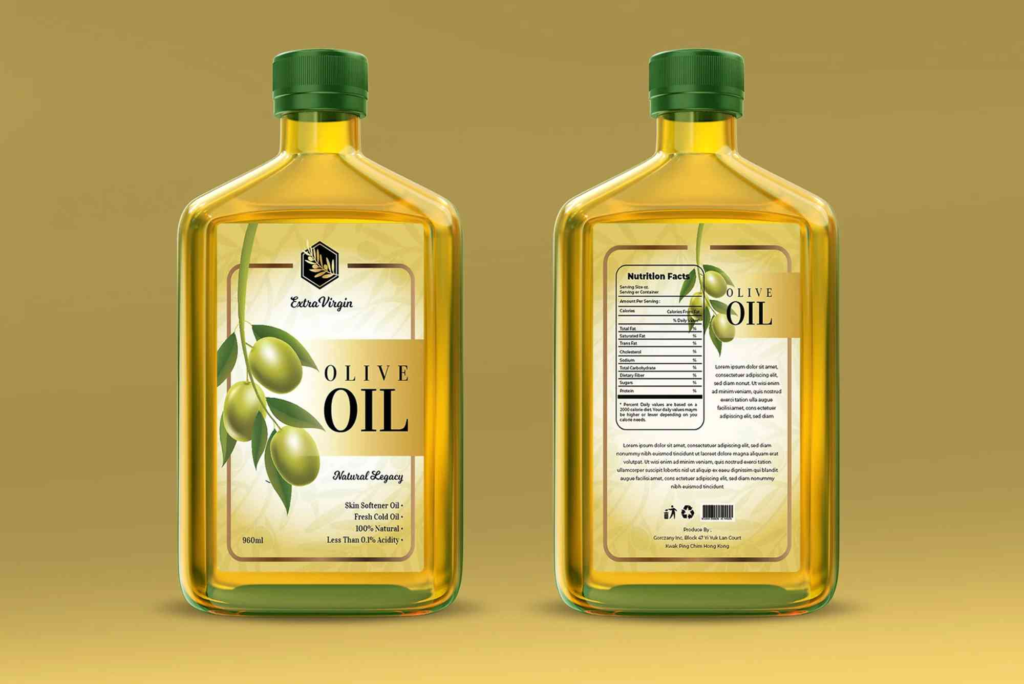
Olive oil label design plays a powerful role in shaping how customers perceive your product. In a crowded retail environment, a thoughtfully crafted label can instantly communicate quality, authenticity, and heritage. Whether you are launching a boutique extra virgin range or refreshing an established brand, the right olive oil label design can transform your packaging into a silent salesperson.
Consumers often decide within seconds. Therefore, your label must build trust and reflect the character of your oil. From typography to colours palettes, every detail matters. This guide explores how to create an olive oil label design that stands out while meeting legal and branding requirements in the UK market.
Why Olive Oil Label Design Matters More Than Ever
Olive oil is no longer just a kitchen staple. It has become a lifestyle product associated with wellness and Mediterranean living. As a result, olive oil label design must communicate purity, origin, and craftsmanship.
When shoppers scan shelves, they look for signals of quality. Clear information, elegant finishes, and strong branding influence buying decisions. A premium olive oil label design signals authenticity and reassures customers about taste and sourcing.
Moreover, attractive packaging increases perceived value. This allows brands to position products at a higher price point. In competitive supermarkets and artisan food shops alike, presentation drives performance.
Understanding Your Target Market
Before developing an olive oil label design, you must define your audience. Are you targeting health-conscious families, gourmet chefs, or luxury gift buyers? Each segment responds to different visual cues.
A minimalist label may appeal to modern urban consumers. In contrast, traditional typography and rustic textures attract buyers who value heritage. Your olive oil label design should reflect your brand’s story and resonate with your intended market.
Additionally, consider where your product will be sold. Online marketplaces require bold visuals that photograph well. Farm shops and delicatessens may favour handcrafted aesthetics. Aligning design choices with buyer expectations improves engagement and sales.
Key Elements of Effective Olive Oil Label Design
A strong olive oil label design balances creativity with clarity. Typography is crucial because it conveys personality. Serif fonts often communicate tradition and authenticity. Sans-serif fonts feel modern and clean.
Colours selection also influences perception. Deep greens and earthy tones reflect natural origins. Gold accents suggest premium quality. Meanwhile, white backgrounds create a fresh and refined look.
Imagery should support the brand message without overwhelming the layout. Illustrations of olive branches, groves, or Mediterranean landscapes evoke provenance. However, avoid clutter. Simplicity improves readability and shelf impact.
Material choices further enhance the overall effect. Textured papers, foil stamping, and embossed details elevate a standard bottle into a luxury product. These finishing touches reinforce the value communicated by your olive oil label design.
Legal Requirements for Olive Oil Labels in the UK
Beyond aesthetics, compliance is essential. UK regulations require specific information on olive oil packaging. This includes the product name, net quantity, best before date, storage instructions, and origin details.
If your product is labelled “extra virgin,” it must meet defined chemical and sensory standards. Claims about health benefits must comply with Food Standards Agency guidance. For full regulatory advice, consult official resources such as the UK Government’s food labelling guidance.
Your olive oil label design must incorporate this information clearly. Legibility is critical. Use adequate font sizes and strong contrast to ensure customers can read details easily.
Storytelling Through Packaging
Modern consumers value transparency. Therefore, your olive oil label design should tell a compelling story. Highlight the region of harvest, farming methods, or family heritage behind the brand.
Storytelling builds emotional connection. A short narrative printed on the back label adds authenticity and trust. For example, sharing details about traditional cold-press methods or sustainable farming enhances perceived quality.
Additionally, linking to a website or QR code provides deeper engagement. This allows customers to explore recipes, sourcing information, or brand values beyond the bottle.
Premium Finishes That Elevate Shelf Presence
High-end olive oil brands often use distinctive finishing techniques. Matte coatings create a soft, contemporary feel. Gloss highlights specific elements such as logos or gold accents.
Embossing adds texture and tactile appeal. Foil stamping introduces metallic shine that attracts attention under retail lighting. These techniques elevate olive oil label design from functional to luxurious.
However, premium finishes must align with brand positioning. Overuse can appear excessive. Balanced design ensures elegance rather than extravagance.
Sustainability and Eco-Conscious Packaging
Sustainability increasingly influences purchasing decisions. As a result, eco-friendly olive oil label design can enhance brand reputation.
Recycled paper labels, water-based inks, and biodegradable adhesives reduce environmental impact. Communicating these efforts on your packaging reinforces responsible values.
Glass bottles remain popular due to recyclability. Some brands also experiment with refill pouches to minimise waste. Thoughtful sustainability choices improve both consumer trust and long-term brand perception.
Customisation and Brand Consistency
Consistency across product ranges strengthens recognition. If you offer multiple olive oil varieties, maintain a cohesive design system while differentiating flavours.
Colours coding works well for distinguishing infusions or harvest years. Meanwhile, consistent logo placement ensures visual harmony. For brands exploring tailored packaging solutions, consider professional Custom Labels to achieve refined results that reflect premium positioning.
Design consistency extends beyond bottles. Outer cartons, gift sets, and shipping materials should mirror the same visual language. This creates a seamless customer experience from shelf to home.
Drawing Creative Direction from Industry Trends
Staying updated with design trends keeps your brand relevant. Minimalist layouts, hand-drawn typography, and heritage-inspired crests remain popular in olive oil label design.
Researching global packaging showcases fresh ideas. Platforms like label design inspiration offer insight into innovative concepts and award-winning designs. Observing competitors also reveals gaps and opportunities within your niche.
However, trends should inform rather than dictate. Authenticity matters more than imitation. Your olive oil label design must feel genuine to your brand story.
Working with Professional Designers
While DIY tools exist, professional expertise ensures precision and compliance. Graphic designers understand print specifications, colours calibration, and material compatibility.
They also help balance aesthetics with legal requirements. From dielines to finishing techniques, experienced designers prevent costly production errors.
Collaborating with packaging specialists further streamlines the process. If you are seeking local support, you can explore Buddy Packaging Location for tailored packaging solutions that align with UK market standards.
The Psychology Behind Colours and Typography
Colours psychology significantly impacts consumer behaviour. Green communicates freshness and health. Black suggests sophistication and exclusivity. Cream tones imply artisanal craftsmanship.
Typography also influences perception. Elegant scripts convey heritage. Clean sans-serif fonts suggest purity and modernity. A carefully chosen combination strengthens olive oil label design effectiveness.
Maintaining balance is essential. Too many fonts or colours create confusion. A refined, focused design improves brand memorability.
Printing Considerations and Technical Precision
An exceptional olive oil label design must translate flawlessly from screen to print. High-resolution artwork ensures sharp results. Bleed areas and safe zones prevent trimming errors.
Paper selection affects durability. Kitchen environments expose bottles to oil splashes and moisture. Therefore, water-resistant materials are advisable.
Adhesive quality also matters. Labels must adhere securely without bubbling. Testing samples before mass production prevents costly reprints.
Common Mistakes to Avoid
Overcrowding information weakens impact. Simplicity enhances clarity. Avoid excessive imagery that distracts from key details.
Poor contrast reduces legibility. Ensure text stands out clearly against background colours. Additionally, do not exaggerate claims. Misleading information damages credibility and may breach regulations.
Lastly, neglecting target audience research often leads to ineffective olive oil label design. Design should reflect buyer preferences rather than personal taste alone.
Transform Your Brand with Strategic Olive Oil Label Design
Olive oil label design is far more than decoration. It is a strategic branding tool that shapes perception, builds trust, and drives sales. By combining compliance, storytelling, premium finishes, and sustainability, you create packaging that resonates deeply with customers.
If you are ready to elevate your product presence, invest in thoughtful, professional design that reflects your oil’s quality and heritage. Strong olive oil label design can position your brand confidently within competitive UK markets.
Frequently Asked Questions
What information must be included on an olive oil label in the UK?
An olive oil label in the UK must include the product name, net quantity, best before date, storage instructions, origin, and business details. Extra virgin claims must meet official standards.
How do I make my olive oil label look premium?
Use high-quality materials, elegant typography, and restrained colours palettes. Consider finishes like embossing or foil stamping to enhance visual appeal.
Can I design my own olive oil label?
Yes, but professional designers ensure regulatory compliance and print accuracy. Expert input reduces production errors and enhances brand impact.
What colours work best for olive oil label design?
Earthy greens, gold accents, black, and cream tones are popular. These colours convey freshness, luxury, and authenticity effectively.
How important is sustainability in olive oil packaging?
Sustainability is increasingly important. Eco-friendly materials and transparent sourcing information improve brand reputation and consumer trust.