Oil Label Design: The Complete Guide to Stand Out on the Shelf
In today’s competitive retail landscape, oil label design plays a critical role in influencing buying decisions. Whether you’re selling essential oils, cooking oils, CBD oils, or automotive lubricants, your label is often the first interaction a customer has with your product. A well-crafted oil label design does more than look attractive — it communicates quality, compliance, and brand identity.
From regulatory requirements to material selection and visual hierarchy, this comprehensive guide will walk you through everything you need to know about creating an effective oil label design that builds trust and drives sales.
Why Oil Label Design Matters for Your Brand
A thoughtfully created oil label design is not just decoration. It’s a marketing tool, a compliance document, and a brand ambassador all at once.
First Impressions Influence Purchase Decisions
Studies consistently show that consumers make snap judgments based on packaging. In crowded markets — especially in wellness and food industries — your oil label design must:
- Capture attention quickly
- Communicate product type clearly
- Build instant credibility
A cluttered or poorly printed label can undermine even the highest-quality oil.
Builds Trust and Brand Authority
Professional oil label design signals reliability. For example:
- Clear ingredient lists build transparency
- Certifications (organic, cruelty-free, etc.) reinforce credibility
- Batch numbers and expiry dates show accountability
Consumers are increasingly label-conscious. They want clarity before committing to purchase.
Ensures Regulatory Compliance
Depending on the oil type, you must follow specific regulations:
- Food oils require nutritional information
- Essential oils may require safety warnings
- CBD oils must include legal disclaimers
- Automotive oils require performance standards
An effective oil label design ensures compliance while maintaining visual appeal.
Key Elements of a Successful Oil Label Design
Creating a strong oil label design involves balancing aesthetics with functionality.
Product Name and Variant
Your product name must be the focal point. Use:
- Clear typography
- High contrast colours
- Appropriate sizing
For example, “Cold-Pressed Extra Virgin Olive Oil” should be immediately readable from a distance.
Brand Identity
Your oil label design should align with your overall brand. Consider:
- Logo placement
- Consistent colour palette
- Typography hierarchy
Luxury essential oils often use minimalist, muted designs. Cooking oils may lean toward natural, earthy tones.
Mandatory Information
Depending on product category, your oil label design must include:
- Net quantity
- Ingredients
- Directions for use
- Safety warnings
- Manufacturer details
- Batch number and expiry date
Leaving out critical information can lead to legal trouble.
Visual Hierarchy
A common mistake in oil label design is overcrowding. Structure your label so that:
- Brand name
- Product type
- Key benefits
- Supporting details
…are visually prioritized in that order.
Choosing the Right Materials for Oil Label Design
Oil products are prone to leaks, spills, and moisture. Your oil label design must account for durability.
Waterproof and Oil-Resistant Materials
Paper labels may not survive oil exposure. Instead, consider:
- BOPP (biaxially oriented polypropylene)
- Vinyl
- Laminated finishes
These materials prevent smudging and peeling.
Adhesive Strength
Oil bottles are often glass or plastic. Your oil label design must use adhesives that:
- Stick securely to curved surfaces
- Resist oil contamination
- Withstand temperature changes
Finishing Options
Finishing enhances your oil label design’s premium feel:
- Matte lamination for elegance
- Gloss finish for vibrancy
- Foil stamping for luxury
- Embossing for texture
Premium finishing can justify higher pricing.
Designing Oil Labels for Different Industries
Not all oil label design strategies are the same. Industry context matters.
Essential Oil Label Design
Essential oil buyers care about purity and safety. Your oil label design should include:
- Botanical name
- Extraction method
- Dilution warnings
- Usage instructions
Packaging is equally important. Pairing your label with quality packaging like Custom Labels ensures cohesive branding and product protection.
Cooking Oil Label Design
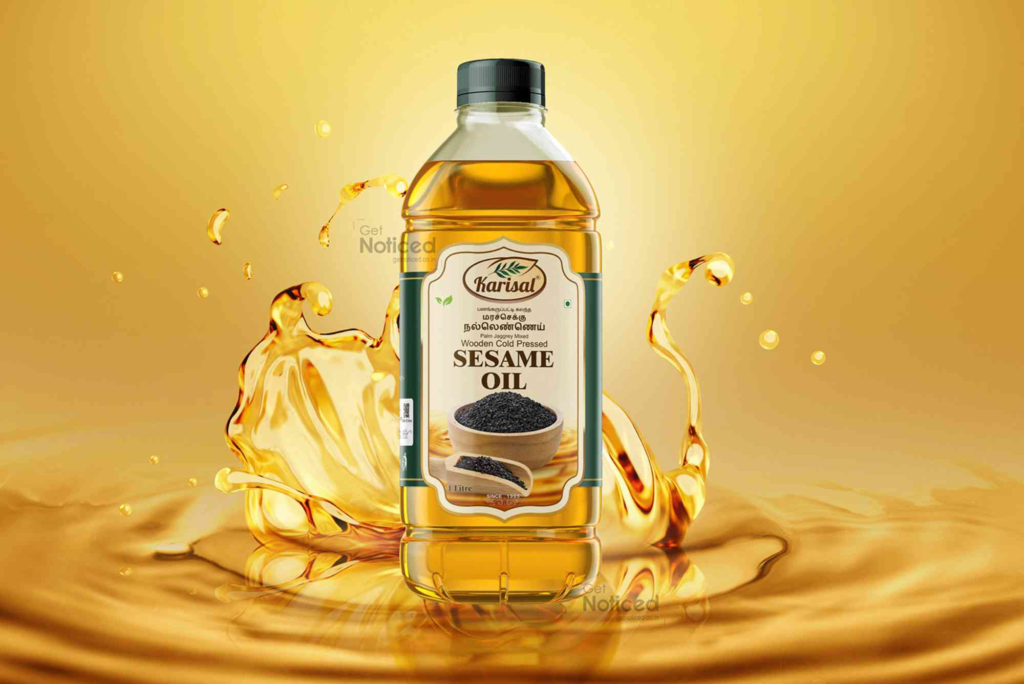
For food oils, transparency is critical. Your oil label design should clearly display:
- Nutritional facts
- Source (organic, cold-pressed)
- Country of origin
Natural imagery and earthy tones often resonate with health-conscious buyers.
CBD Oil Label Design
CBD oil requires careful compliance. Your oil label design must:
- Include THC content
- Avoid medical claims
- Display lab testing information
Minimalist designs often perform well in this space.
Automotive Oil Label Design
For lubricants and engine oils, clarity and performance claims are key. Your oil label design should emphasize:
- Viscosity grade
- Performance standards (e.g., API ratings)
- Compatibility information
Bold fonts and industrial colour schemes typically dominate this sector.
Step-by-Step Process to Create an Effective Oil Label Design
Creating a professional oil label design requires planning.
Understand Your Target Audience
Ask yourself:
- Who is buying this oil?
- What are their priorities — luxury, affordability, purity?
- Where will it be sold — retail, online, wholesale?
Audience insights shape your oil label design direction.
Research Competitors
Analyze shelf competitors:
- What colours dominate?
- What information is highlighted?
- Where are gaps you can fill?
Standing out doesn’t always mean being louder — sometimes simplicity wins.
Develop a Clear Layout
Before jumping into graphics:
- Sketch wireframes
- Define information hierarchy
- Allocate space for compliance text
A structured layout prevents clutter.
Apply Professional Design Principles
For deeper creative inspiration, explore expert label design tips from trusted design resources. Focus on:
- Contrast
- Alignment
- White space
- Readability
Good oil label design balances creativity with clarity.
Test Before Printing
Always:
- Print prototypes
- Check legibility at shelf distance
- Test durability under oil exposure
Testing ensures your oil label design performs in real-world conditions.
Common Mistakes in Oil Label Design
Avoid these pitfalls:
Overcrowding the Label
Too much text reduces readability. Prioritize essential information.
Ignoring Compliance
Skipping mandatory information can lead to product recalls.
Poor Font Choices
Decorative fonts may look attractive but hurt readability.
Low-Quality Printing
Blurry prints or faded colours instantly reduce perceived product value.
Trends Shaping Modern Oil Label Design
Staying current helps your product feel relevant.
Minimalist Aesthetic
Clean layouts with generous white space are trending across wellness brands.
Sustainable Materials
Eco-friendly oil label design using recyclable materials appeals to conscious consumers.
Transparent Labels
Clear labels that allow the oil colour to show through create a premium look.
QR Codes for Engagement
Adding QR codes allows customers to:
- View lab reports
- Access usage guides
- Watch brand story videos
Modern oil label design goes beyond print.
Where to Get Professional Oil Label Design Support
If you’re serious about scaling your product, working with professionals can save time and costly mistakes.
Collaborate with packaging experts who understand compliance and material science. You can also explore Buddy Packaging Location to connect with specialists who provide tailored packaging and labeling solutions.
Professional guidance ensures your oil label design is not only attractive but also market-ready.
FAQs
What should be included on an oil label?
An oil label design should include product name, ingredients, net quantity, usage instructions, manufacturer details, batch number, and any required safety warnings or certifications.
How do you design a label for essential oils?
Essential oil label design requires listing the botanical name, extraction method, safety warnings, dilution instructions, and compliance details. It should also reflect purity and professionalism.
What material is best for oil labels?
Waterproof materials like BOPP or vinyl are ideal for oil label design because they resist moisture, oil exposure, and temperature fluctuations.
How big should an oil bottle label be?
The size depends on bottle shape and capacity. Your oil label design should wrap neatly without wrinkling and leave room for mandatory information while remaining readable.
Can I print oil labels at home?
While possible for small batches, professional printing ensures durability, colour accuracy, and compliance. For commercial products, professional oil label design and printing are strongly recommended
A well-executed oil label design can be the difference between a product that blends into the background and one that commands attention. It builds trust, ensures compliance, communicates value, and influences purchasing decisions.
Whether you’re launching a premium essential oil line, a health-focused cooking oil, or a high-performance automotive lubricant, investing in professional oil label design is a strategic move — not just a creative one.