Introduction
Indian block printing designs have long been admired for their beauty, precision, and cultural depth. Rooted in centuries-old traditions, this art form reflects craftsmanship passed down through generations. Today, indian block printing designs continue to inspire fashion, interiors, and even modern branding. Their charm lies in the balance of heritage and creativity.
From delicate florals to bold geometric motifs, these designs tell stories through fabric. As interest in sustainable and handmade products grows, more people are rediscovering the value of this craft. In this guide, you will explore its origins, techniques, and modern relevance, along with how it influences creative industries today.
The History of Indian Block Printing Designs
Indian block printing designs date back over 2,000 years. Early artisans carved patterns into wooden blocks and used natural dyes to transfer designs onto fabric. This method flourished in regions such as Rajasthan and Gujarat, where skilled craftsmen refined the art.
Over time, these designs became popular in global trade. During the Mughal era, intricate floral patterns gained prominence. Later, European markets embraced Indian textiles, especially printed cottons. As a result, indian block printing designs influenced global fashion trends and textile production methods.
Despite industrialisation, the traditional process has survived. Many artisans still use age-old techniques, preserving authenticity while adapting to modern tastes.
The Craftsmanship Behind the Designs
Hand-Carved Wooden Blocks
At the heart of indian block printing designs lies the wooden block. Craftsmen carve each block by hand, often using teak or sheesham wood. The precision required is remarkable, as even a minor error can affect the final pattern.
Each colour in a design requires a separate block. This means a single fabric piece may involve multiple blocks and careful alignment. This process highlights the patience and skill of the artisan.
Natural Dyes and Sustainable Methods
Traditionally, indian block printing designs use natural dyes derived from plants, minerals, and even insects. Indigo, turmeric, and madder root are commonly used. These dyes not only produce rich colours but also ensure eco-friendly production.
In today’s environmentally conscious world, this sustainable approach has gained renewed importance. Many designers now prefer these methods to reduce environmental impact while maintaining quality.
The Printing Process
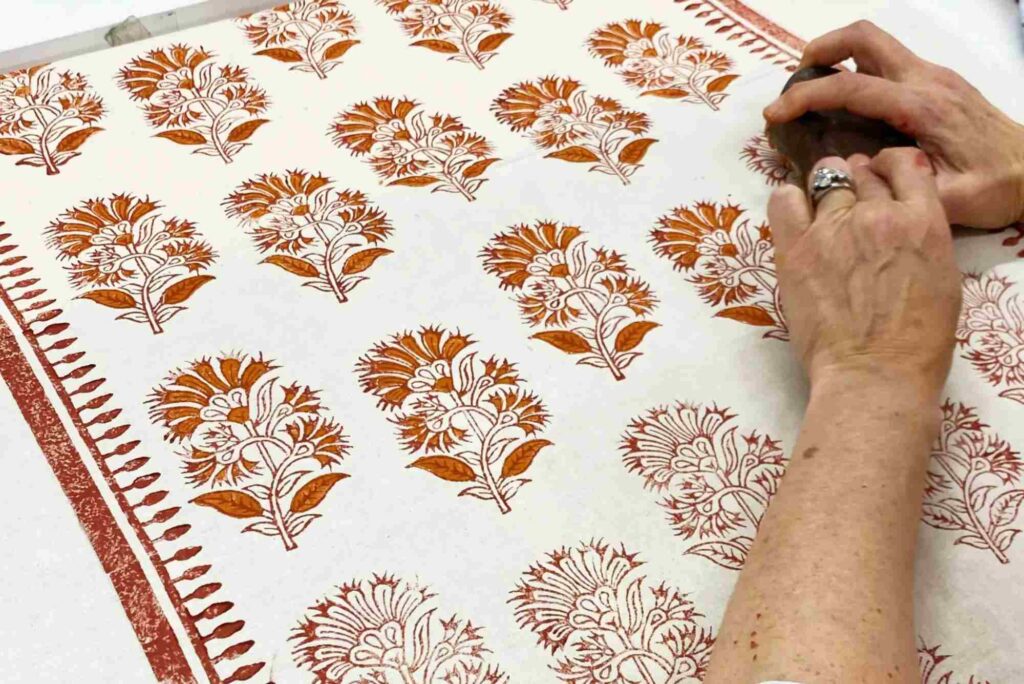
The process begins with preparing the fabric, usually cotton or silk. It is washed to remove impurities. Then, artisans dip the block into dye and press it onto the fabric with precision.
Consistency is key. Each stamp must align perfectly with the previous one. This repetitive yet delicate process gives indian block printing designs their unique handmade appeal.
Popular Styles of Indian Block Printing Designs
Floral Motifs
Floral patterns are among the most iconic indian block printing designs. Inspired by nature, they often feature vines, leaves, and blossoms. These designs symbolise growth and harmony.
Geometric Patterns
Geometric designs offer a more structured aesthetic. Repeating shapes create symmetry and balance. These patterns are widely used in both traditional and modern textiles.
Paisley and Traditional Motifs
Paisley, known locally as “mango motif,” is a classic element. It represents fertility and life. Alongside paisley, motifs such as elephants and peacocks reflect cultural symbolism.
These varied styles ensure that indian block printing designs remain versatile and appealing across different tastes.
Modern Applications of Indian Block Printing Designs
Indian block printing designs are no longer limited to traditional clothing. They have expanded into various industries, blending heritage with innovation.
In fashion, designers incorporate these prints into contemporary garments. Dresses, shirts, and scarves often feature block-printed patterns. This fusion creates a unique aesthetic that appeals globally.
In home décor, these designs appear on cushions, curtains, and bedding. Their handcrafted look adds warmth and character to interiors. Moreover, businesses use such patterns for branding and product packaging. For example, creative teams often draw from these patterns as Custom Packaging ideas, linking tradition with modern design concepts.
Additionally, digital artists reinterpret indian block printing designs for online platforms. This ensures the craft remains relevant in a technology-driven world.
Why Indian Block Printing Designs Are Still Relevant
The enduring appeal of indian block printing designs lies in their authenticity. In a world dominated by mass production, handmade items stand out. Each piece carries slight variations, making it unique.
Furthermore, consumers are increasingly valuing sustainability. Since block printing often uses natural materials, it aligns with eco-friendly practices. This makes it attractive to conscious buyers.
Culturally, these designs represent identity and heritage. They connect people to history while allowing creative expression. As a result, indian block printing designs continue to thrive across generations.
The Influence on Global Design Trends
Indian block printing designs have influenced designers worldwide. Their patterns have inspired collections in Europe, the United States, and beyond. Many global brands incorporate similar motifs into their products.
This influence extends to digital platforms as well. Designers frequently seek packaging design inspiration from traditional patterns. The balance of colour, symmetry, and storytelling makes these designs ideal for creative adaptation.
Moreover, collaborations between artisans and international designers have increased. These partnerships help preserve traditional skills while expanding market reach.
Challenges Facing the Craft
Despite its popularity, indian block printing designs face several challenges. Machine printing offers faster and cheaper alternatives, which can reduce demand for handmade products.
Additionally, younger generations may not always pursue traditional crafts. Without proper support, skilled artisans may leave the industry.
However, initiatives promoting handmade goods and fair trade practices are helping address these issues. Increased awareness can ensure the survival of this art form.
How to Identify Authentic Indian Block Printing Designs
Authenticity is essential when appreciating indian block printing designs. Handmade prints often show slight irregularities. These imperfections are signs of genuine craftsmanship.
The texture of the fabric also differs from machine-printed textiles. Natural dyes may produce subtle colour variations, adding depth to the design.
Understanding these characteristics helps buyers make informed choices and support traditional artisans.
Caring for Block Printed Fabrics
Proper care ensures the longevity of indian block printing designs. Since natural dyes are often used, gentle washing is recommended. Cold water and mild detergents help preserve colours.
Avoid direct sunlight when drying, as it may fade the fabric. With proper care, these textiles can last for years while maintaining their beauty.
The Future of Indian Block Printing Designs
The future of indian block printing designs looks promising. With growing appreciation for handmade and sustainable products, demand is likely to increase.
Technology also plays a role. While the printing itself remains traditional, digital platforms help artisans reach global audiences. Online marketplaces allow them to showcase their work beyond local markets.
Education and awareness are equally important. Workshops and exhibitions introduce new audiences to the craft. This ensures that the tradition continues to evolve while preserving its roots.
Indian block printing designs represent a perfect blend of tradition, artistry, and sustainability. Their timeless appeal continues to inspire designers, businesses, and consumers worldwide. From clothing to home décor and branding, these patterns offer endless possibilities.
By supporting this craft, you contribute to preserving cultural heritage and empowering artisans. If you are looking for unique designs that combine history with creativity, indian block printing designs are an excellent choice. Explore their beauty and consider incorporating them into your lifestyle or business projects today.
Envelope printing design plays a vital role in creating a strong first impression for any business or personal correspondence. A well-crafted envelope not only protects its contents but also reflects your brand identity through colours, typography, and layout. By investing in creative and professional envelope printing design, you can enhance credibility, attract attention, and ensure your message stands out before it is even opened.
FAQs
What are indian block printing designs?
Indian block printing designs are patterns created by stamping carved wooden blocks onto fabric using dyes. They are known for their handmade quality and cultural significance.
Which regions are famous for block printing in India?
Rajasthan and Gujarat are the most famous regions. They are known for traditional techniques and distinctive patterns.
Are block printed fabrics eco-friendly?
Yes, many indian block printing designs use natural dyes and sustainable methods. This makes them environmentally friendly.
How can I tell if a block print is handmade?
Look for slight irregularities in the pattern and colour. These variations indicate hand printing rather than machine production.
Where are indian block printing designs used today?
They are used in fashion, home décor, and even branding. Many designers also use them for creative and packaging purposes.