Preparing cargo for international transport is more than just loading goods into a container. Proper container shipping preparation directly affects cargo safety, delivery timelines, and overall logistics costs. Businesses that invest time in packaging, labeling, and shipment control significantly reduce risks and improve supply chain efficiency.
Why Proper Container Shipping Preparation Matters?
Incorrect container cargo preparation can lead to serious consequences — from damaged goods to costly delays at ports. During transit, containers are exposed to vibration, humidity, stacking pressure, and frequent handling.
Without proper preparation, even minor mistakes in packaging for container transport can result in financial losses. That’s why companies focus not only on how to prepare cargo for shipping, but also on how to monitor it throughout the journey.
Cargo Packaging for Shipping: Choosing the Right Solution
Cargo packaging for shipping should be selected based on the type, weight, and sensitivity of goods. Common solutions include cartons, pallets, crates, and bulk packaging.
To ensure container freight safety, packaging must:
- protect cargo from moisture and temperature changes
- withstand stacking pressure inside the container
- prevent movement during transit
For fragile or high-value goods, additional protective materials such as cushioning, shrink wrap, or waterproof layers are essential. Proper packaging for container transport reduces the risk of damage and simplifies cargo handling.
Shipping Container Labeling: What You Must Include
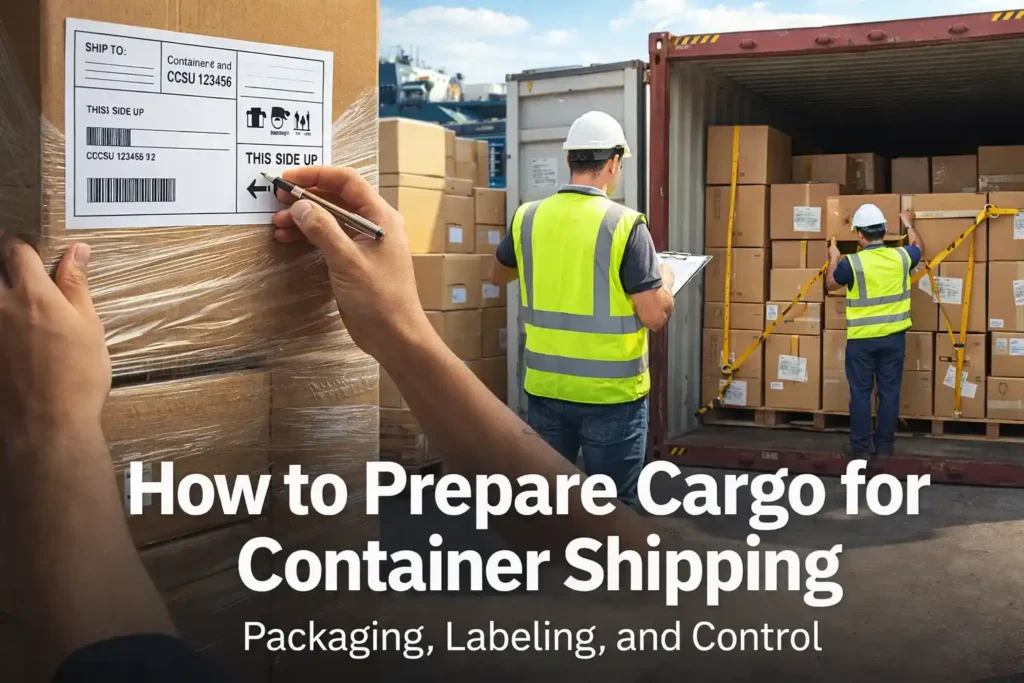
Shipping container labeling is critical for smooth logistics operations. Clear and accurate labels help handlers understand how to treat the cargo and avoid mistakes.
Essential labeling elements include:
- consignee and shipper information
- cargo description
- handling instructions (fragile, keep dry, this side up)
- container and shipment identification numbers
Incorrect or missing labels can lead to delays, misrouting, or improper handling. Standardized shipping container labeling ensures that cargo moves efficiently through every stage of the supply chain.
Cargo Securing in Container: Avoiding Damage During Transit
Even the best packaging won’t protect goods if they are not properly secured inside the container. Cargo securing in container is a crucial step in container loading preparation.
Key principles include:
- even weight distribution
- tight securing with straps, blocking, or bracing
- minimizing empty space to prevent shifting
Improper cargo securing is one of the most common causes of damage during shipping. By following container loading preparation best practices, businesses can significantly improve cargo stability.
Container Shipping Checklist Before Dispatch
Before sending your shipment, use this container shipping checklist:
- verify cargo packaging for shipping is suitable
- check all shipping container labeling is accurate
- ensure cargo securing in container is completed
- confirm documentation is ready
- inspect container condition before loading
This checklist helps prevent common mistakes and ensures your shipment is ready for international shipping preparation.
Why Control and Visibility Matter in Container Shipping?
Even with perfect preparation, risks remain during transit. Delays, route changes, and unexpected disruptions can still affect your shipment.
That’s why control and visibility are essential. Using a tracking solution like TimeToCargo allows businesses to monitor shipments in real time, track container status across multiple carriers, and react quickly to any issues.
With a single platform, you can track containers by number, bill of lading, or booking reference and keep all shipment data in one place.
Conclusion
Effective container shipping preparation requires attention to detail at every stage — from packaging and labeling to cargo securing and shipment control.
By combining proper cargo packaging for shipping with real-time visibility tools, businesses can reduce risks, prevent cargo damage, and ensure smoother logistics operations.
In modern supply chains, preparation and control go hand in hand — and both are essential for successful container transport.