Introduction
Packaging is often the first physical interaction a customer has with a product. Before someone experiences quality, performance, or value, they experience the packaging. That is why understanding the basics of packaging design is essential for any brand that wants to build trust, create recognition, and increase sales. Great packaging does more than protect a product—it communicates identity, tells a story, and creates an emotional connection.
Whether you are launching a startup product, rebranding an existing line, or exploring better presentation strategies, learning the basics of packaging design can help you make smarter design decisions. In today’s competitive marketplace, customers often make purchasing decisions in seconds, and packaging plays a major role in that moment.
Businesses looking for premium product presentation often explore Custom Packaging solutions to create stronger branding and customer experiences.
What Is Packaging Design?
Packaging design is the process of creating the exterior appearance, structure, materials, graphics, and functionality of a product package. It combines branding, marketing, engineering, and customer psychology into one visual and physical experience.
At its core, the basics of packaging design focus on creating packaging that protects the product, communicates information clearly, and appeals visually to the target audience. A successful package must balance creativity with functionality.
Every packaging design should answer important questions. What does the product do? Who is it for? Why should a customer choose it over competitors? The package should communicate these answers without confusion.
Why Packaging Design Matters
The importance of packaging goes beyond appearance. Consumers often judge quality based on packaging before they ever use the product. Premium packaging can increase perceived value, while poor packaging may damage brand credibility.
Understanding the basics of packaging design helps businesses build consistency across products. When customers recognize your visual identity instantly, trust begins to form. This trust often leads to repeat purchases and word-of-mouth marketing.
Packaging also influences online sales. In eCommerce, unboxing experiences have become part of brand storytelling. Attractive packaging encourages social sharing, user-generated content, and stronger brand recall.
Core Elements of Packaging Design
Brand Identity
Brand identity is one of the foundations of the basics of packaging design. Packaging should reflect your brand personality through colours, fonts, logos, and messaging.
A luxury brand may use minimalist layouts, premium finishes, and neutral tones. A playful brand may use bright colours, illustrations, and energetic typography. Consistency builds recognition.
When customers see your product on shelves or online, your branding should feel familiar and memorable.
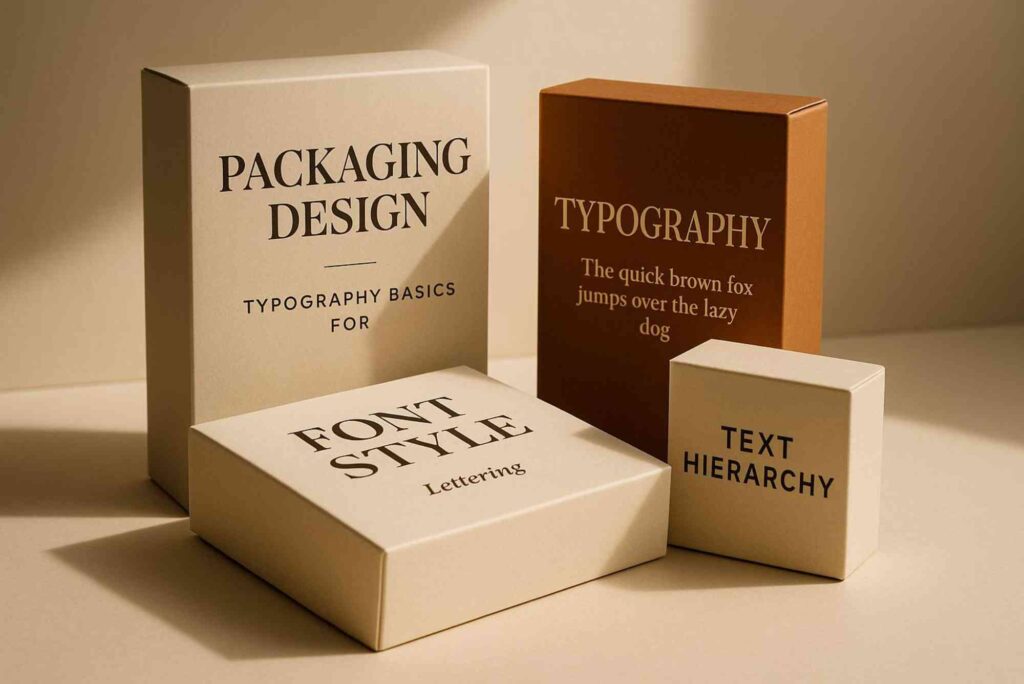
Typography
Typography affects readability, mood, and professionalism. Font choices should match your product category and audience expectations.
Food packaging often uses warm, inviting fonts. Tech products may use modern, clean typography. The right typography helps customers absorb product information quickly.
In the basics of packaging design, typography is not just decoration—it is communication.
Colour Psychology
Colours influence emotions and buying behavior. Blue often suggests trust and professionalism. Green communicates sustainability or health. Red creates urgency and excitement.
Choosing colours strategically is a major part of the basics of packaging design because colour often creates the first emotional response.
Colour consistency also helps strengthen brand identity across multiple products.
Imagery and Graphics
Visual elements help customers understand products faster. Product illustrations, icons, photography, or graphic patterns can communicate benefits, ingredients, or usage instantly.
Good visuals simplify decision-making. Poor visuals create confusion.
Strong graphic design is a central part of the basics of packaging design because visuals shape first impressions.
The Role of Materials in Packaging Design
Material selection directly impacts functionality, sustainability, and brand perception. Common packaging materials include cardboard, corrugated boxes, rigid paperboard, plastic, glass, and metal.
Cardboard is widely used because it is lightweight, affordable, and customisable. Glass often communicates premium quality. Flexible packaging works well for convenience-based products.
When learning the basics of packaging design, material choice should always align with product protection, transportation needs, and customer expectations.
Sustainable materials are becoming increasingly important. Modern consumers care about environmental impact, and recyclable packaging can improve brand reputation.
Structural Packaging Design
Packaging is not only visual—it is physical. Structural design focuses on how packaging opens, closes, protects, and functions.
A box that is difficult to open creates frustration. A weak structure can damage products during shipping. Functional packaging creates convenience and customer satisfaction.
The basics of packaging design include understanding dimensions, folding styles, inserts, closures, and durability.
Structure also influences shelf presentation. A unique shape can make a product stand out among competitors.
Packaging and Consumer Psychology
People often buy with emotion and justify with logic. Packaging influences emotions before customers evaluate features or price.
Soft textures, premium finishes, embossing, matte coatings, and magnetic closures can create feelings of luxury. Bright colours and playful illustrations may appeal to younger audiences.
Understanding consumer behavior is a major part of the basics of packaging design because packaging directly affects purchase decisions.
Brands that understand emotional triggers often outperform competitors with stronger visual storytelling.
Information Hierarchy in Packaging
Customers should quickly understand what the product is, what it does, and why it matters.
Information hierarchy means organizing content so the most important details are seen first. Product name, brand name, benefits, ingredients, instructions, and legal information should all be arranged clearly.
In the basics of packaging design, clutter reduces impact. Clean information flow improves readability and trust.
Packaging should guide the eye naturally from the main product message to supporting details.
Packaging Trends and Modern Finishing
Packaging trends evolve with customer expectations. Minimalism, eco-friendly materials, tactile finishes, and personalised packaging are growing in popularity.
Luxury packaging often includes foil stamping, embossing, spot UV, and textured coatings. These finishing methods enhance perception and create memorable experiences.
Designers looking for industry updates and production expertise often study print & finishing insights to stay informed about modern packaging developments.
Learning advanced finishing techniques expands your understanding of the basics of packaging design and helps create stronger product positioning.
Packaging Design for Local Business Branding
Local brands often overlook how packaging influences customer loyalty. Whether selling cosmetics, bakery items, electronics, or handmade products, professional packaging increases perceived value.
A physical business can strengthen trust when customers connect packaging with a real location and brand identity. Businesses can improve local credibility through Buddy Packaging Location and a consistent visual presence.
Local branding becomes stronger when packaging supports both online and offline customer experiences.
Common Packaging Design Mistakes
Many businesses make avoidable packaging mistakes. Overloading the package with information creates confusion. Using inconsistent branding weakens recognition. Choosing style over functionality often leads to customer frustration.
Another mistake is ignoring the target audience. Packaging designed for everyone usually connects with no one.
The basics of packaging design require balancing creativity, clarity, practicality, and emotional appeal.
Testing packaging before mass production can save time, money, and reputation.
How to Build an Effective Packaging Design Strategy
A successful packaging strategy starts with research. Study competitors, customer behavior, market expectations, and product positioning.
Then define your brand identity clearly. Choose materials, colours, typography, and messaging that align with your audience.
Prototype testing is essential. Real-world feedback often reveals usability issues that digital mockups cannot show.
Mastering the basics of packaging design takes experimentation, customer insight, and consistent brand thinking.
Understanding the basics of packaging design can transform how customers perceive your product. Packaging is not simply a protective layer—it is a branding tool, a marketing asset, and a customer experience.
FAQs
What are the basics of packaging design?
The basics of packaging design include branding, colour selection, typography, structural design, material choice, product protection, and clear communication. These elements work together to attract customers and improve product perception.
Why is packaging design important for branding?
Packaging creates the first impression of a product. Strong packaging builds trust, communicates quality, and helps customers recognize a brand quickly.
How do I choose packaging materials?
Material choice depends on product weight, fragility, transportation needs, sustainability goals, and customer expectations. Cardboard, rigid boxes, and recyclable materials are popular options.
What makes packaging attractive to customers?
Customers are attracted by clear branding, balanced colours, quality finishes, easy usability, and packaging that feels relevant to their lifestyle.
Can packaging design increase sales?
Yes. Effective packaging can improve shelf visibility, create emotional connections, enhance perceived value, and influence buying decisions significantly.
Related Reading: Cooking Oil Packaging Design
Related Reading: Drunk Elephant Packaging Design — full guide