Introduction
Card game packaging design plays a crucial role in how a product is perceived, purchased, and remembered. In a competitive market filled with tabletop games, your packaging often becomes the first interaction customers have with your brand. Therefore, investing in thoughtful, creative, and functional packaging is not optional—it is essential.
Whether you are launching a new game or refreshing an existing one, strong card game packaging design can significantly influence buying decisions. It communicates your theme, builds emotional connections, and ensures product protection.
Why Card Game Packaging Design Matters
Card game packaging design is more than just a box. It is a powerful marketing tool. First impressions matter, especially in retail environments or online marketplaces where customers scroll quickly.
Well-designed packaging grabs attention instantly. It tells a story about the game inside. Moreover, it builds trust by signalling quality and professionalism. Poor packaging, on the other hand, can make even the best game seem unappealing. In addition, packaging plays a functional role. It protects the cards from damage, organises components, and enhances usability. This balance between aesthetics and functionality defines successful card game packaging design.
Understanding Your Target Audience
Before designing anything, it is essential to understand your audience. Different demographics respond to different visual styles and packaging formats.
For example, children’s card games often use bright colours and playful illustrations. Meanwhile, strategy games aimed at adults lean towards minimalist or sophisticated designs. Knowing your audience helps you choose the right colour palette, typography, and materials. Furthermore, understanding your audience ensures your packaging communicates clearly. It should instantly signal whether the game is fun, educational, competitive, or casual.
Key Elements of Effective Card Game Packaging Design
Visual Appeal and Branding
Strong visuals are the foundation of successful card game packaging design. Your box should immediately capture attention while reflecting the theme of your game.
Consistent branding is equally important. Use colours, fonts, and imagery that align with your brand identity. This consistency helps build recognition over time. In addition, ensure your game title is clearly visible. It should be easy to read from a distance. Avoid clutter, as too many elements can overwhelm the viewer.
Material Selection and Durability
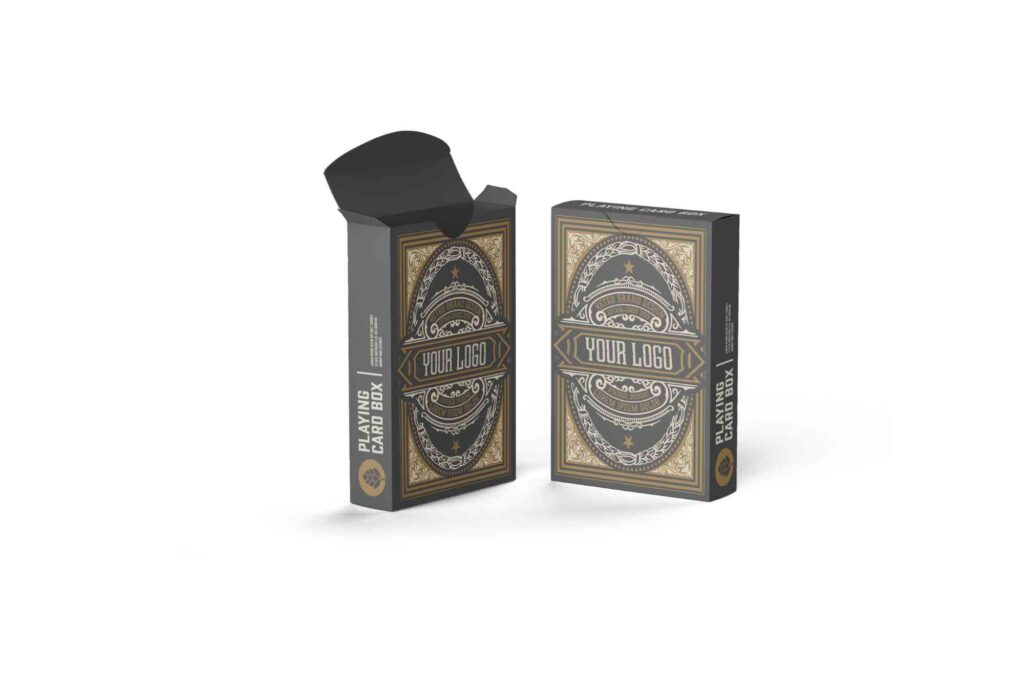
The choice of materials directly impacts both perception and usability. High-quality materials create a premium feel and enhance durability. Rigid boxes, tuck boxes, and magnetic closures are common options. Each serves a different purpose depending on your budget and product type.
Durability is especially important for card games, as they are handled frequently. Investing in sturdy packaging reduces wear and tear, ensuring long-term customer satisfaction.
Functionality and User Experience
A great design is not only attractive but also practical. Packaging should be easy to open, store, and reuse.
Consider how players will interact with the box. Are the cards easy to access? Is there enough space for expansions? Thoughtful design improves the overall gaming experience. Moreover, compact and portable packaging can add value. Many players prefer games they can carry easily.
Sustainability Considerations
Sustainability is becoming increasingly important in packaging design. Consumers are more aware of environmental impact than ever before.
Using recyclable or biodegradable materials can enhance your brand image. It also appeals to eco-conscious buyers. Additionally, reducing excess packaging not only lowers costs but also minimises waste. Sustainable card game packaging design is both responsible and strategic.
Types of Card Game Packaging
Tuck Boxes
Tuck boxes are one of the most common options. They are lightweight, cost-effective, and easy to produce.
They are ideal for standard card decks and smaller games. However, they may not offer the same level of durability as rigid boxes.
Rigid Boxes
Rigid boxes provide a premium feel. They are sturdy and long-lasting, making them perfect for high-end games.
Although more expensive, they enhance perceived value. This can justify a higher retail price.
Magnetic Closure Boxes
These boxes combine elegance with functionality. The magnetic closure adds a sense of luxury and ensures secure storage.
They are often used for collector’s editions or special releases.
Custom Inserts
Custom inserts improve organisation and protection. They keep cards and components in place during transport.
Additionally, inserts enhance the unboxing experience. They make the product feel more thoughtfully designed. For tailored solutions, many brands explore options like Custom Packaging available at to create unique and functional designs.
Design Trends in Card Game Packaging
Card game packaging design continues to evolve with changing consumer preferences. Staying updated with trends can give your product a competitive edge. Minimalist design is gaining popularity. Clean layouts and simple colour schemes create a modern look. At the same time, bold illustrations remain popular for thematic games.
Another trend is interactive packaging. Some designs include hidden elements, puzzles, or storytelling features. These additions enhance engagement even before the game begins. Additionally, premium finishes such as embossing, foil stamping, and spot UV are widely used. These techniques add texture and visual depth. For more inspiration, explore print & finishing insights at to stay informed about industry innovations.
Steps to Create Effective Card Game Packaging Design
Concept Development
Start with a clear concept. Define your game’s theme, audience, and unique selling points.
Sketch initial ideas and explore different directions. This stage is about creativity and experimentation.
Design Execution
Once the concept is finalised, move to digital design. Use professional tools to create precise layouts.
Ensure all elements align with your branding. Pay attention to details such as spacing, alignment, and colour accuracy.
Prototyping and Testing
Creating a prototype is essential. It allows you to test functionality and identify potential issues.
Gather feedback from real users. Their insights can help refine your design before mass production.
Production and Printing
Choose a reliable manufacturer. High-quality printing ensures your design looks as intended.
Check samples carefully before final approval. Small errors can have a big impact on the final product. If you are looking for reliable services, you can explore Buddy Packaging Location at for professional support and consultation.
Common Mistakes to Avoid
Even experienced designers can make mistakes in card game packaging design. Avoiding these pitfalls can save time and money. Overcrowding the design is a common issue. Too many elements can confuse customers and reduce visual impact. Ignoring functionality is another mistake. A beautiful box that is difficult to use will frustrate players.
Poor material choices can also harm your product. Low-quality packaging may lead to damage and negative reviews. Lastly, inconsistent branding can weaken your identity. Ensure all elements align with your overall brand strategy.
How Packaging Influences Buying Decisions
Packaging has a direct impact on consumer behaviour. In many cases, it determines whether a customer picks up your game or not. Attractive packaging creates curiosity. It encourages customers to learn more about the product. Clear information builds trust. Including details such as player count, age range, and gameplay type helps customers make informed decisions.
Additionally, premium packaging can justify a higher price point. It signals quality and value, making customers more willing to invest.
Enhancing the Unboxing Experience
The unboxing experience is an important aspect of modern product design. It creates a memorable first impression.
Consider adding unique elements such as custom inserts, thank-you cards, or hidden artwork. These details make the experience more engaging. Moreover, a well-designed unboxing experience encourages social sharing. Customers are more likely to post about your product online, increasing visibility.
Conclusion
Card game packaging design is a powerful tool that combines creativity, functionality, and strategy. It influences first impressions, enhances user experience, and drives sales. By focusing on your audience, choosing the right materials, and staying updated with design trends, you can create packaging that stands out in a crowded market.
Effective cat packaging design plays a vital role in attracting pet owners while ensuring product safety and convenience. Thoughtful use of colours, materials, and clear labelling helps communicate quality and trust. A well-crafted cat packaging design not only protects the contents but also enhances brand identity and encourages repeat purchases.
FAQs
What is card game packaging design?
Card game packaging design refers to the creation of boxes and containers that store and present card games while enhancing visual appeal and usability.
Why is packaging important for card games?
Packaging protects the product, attracts customers, and communicates the game’s theme and value.
What materials are best for card game packaging?
Common materials include cardboard, rigid board, and eco-friendly alternatives, depending on budget and design goals.
How can I make my card game packaging stand out?
Use unique visuals, high-quality materials, and innovative finishes. Focus on both aesthetics and functionality.
Is sustainable packaging important for card games?
Yes, sustainable packaging appeals to modern consumers and reduces environmental impact, making it a valuable investment.