Food Packaging Design Drawing: The Ultimate Guide
Food packaging plays a vital role in attracting customers and protecting products. A well-executed food packaging design drawing ensures your product stands out on crowded shelves. From concept sketches to final prototypes, this guide explores everything you need to know about creating effective food packaging designs.
Understanding Food Packaging Design Drawing
What is Food Packaging Design Drawing?
Food packaging design drawing is the process of visually planning and sketching packaging before production. It involves conceptualizing the structure, graphics, colors, and textures of food packaging. These drawings serve as a blueprint for manufacturers, designers, and marketing teams.
Importance of Food Packaging Design Drawing
A well-crafted design drawing helps:
- Visualize the product packaging before production
- Ensure functionality and durability
- Attract consumer attention with appealing graphics
- Save costs by identifying errors early
- Align branding across products
Key Elements of Food Packaging Design Drawing
Structure and Form
The packaging’s shape affects usability, storage, and shelf presence. Designers often start with dielines or mock-ups to define the structure accurately. Consider whether your packaging is a box, pouch, jar, or bottle, and ensure the structure supports the product safely.
Graphics and Branding
The visual appeal drives purchase decisions. Include your logo, typography, and colors in the drawing to reflect your brand identity. Consistency in graphics across product lines improves brand recognition.
Material Selection
Materials influence durability, sustainability, and cost. Your food packaging design drawing should indicate whether you’re using cardboard, plastic, glass, or biodegradable materials. This ensures production aligns with the intended material properties.
Functional Features
Consider elements like easy-open tabs, resealable zippers, or portion control. Highlighting these in your design drawing ensures functionality and user-friendliness, which can boost customer satisfaction.
Steps to Create an Effective Food Packaging Design Drawing
Research and Inspiration
Understand your target audience and analyze competitors. Gather inspiration from trends in food packaging, sustainability initiatives, and successful product lines. Resources like print & finishing insights can provide valuable tips on materials and finishes.
Concept Sketching
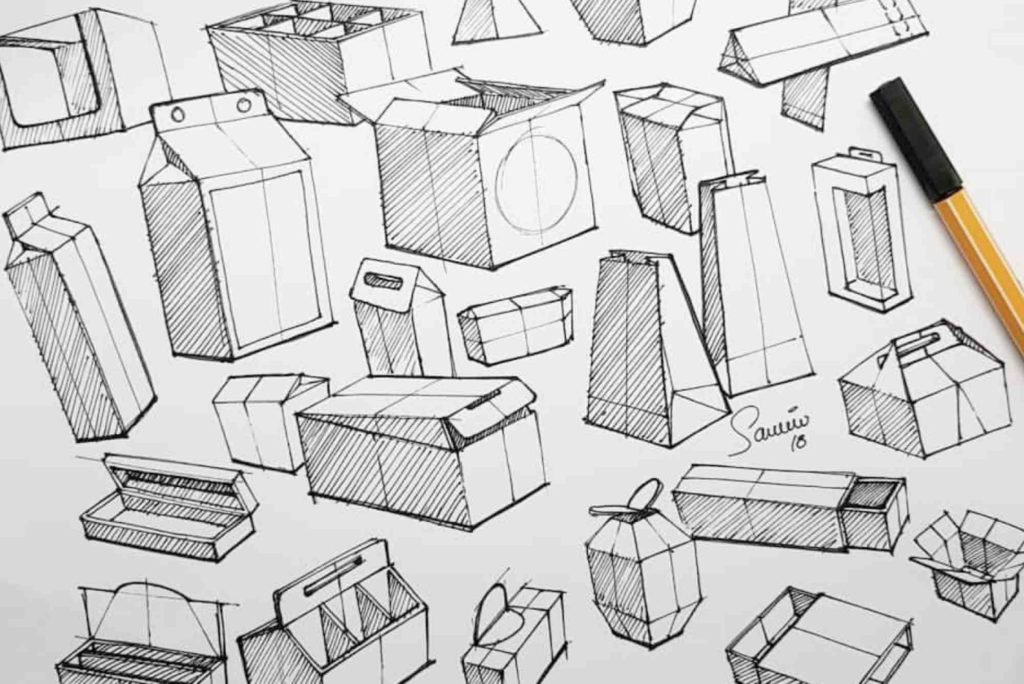
Start with rough sketches to explore shapes, layouts, and visual elements. Focus on multiple ideas without worrying about perfection. Concept sketches allow you to visualize and iterate quickly.
Digital Drafting
Transfer your sketches to digital tools like Adobe Illustrator or CAD software. Digital drawings provide precision and make it easier to adjust dimensions, colors, and branding elements.
Detailing and Annotation
Include dimensions, materials, and functional notes on the drawing. Proper annotations guide manufacturers and reduce production errors.
Review and Feedback
Share the design drawing with team members and stakeholders. Consider feedback on aesthetics, functionality, and cost efficiency. Multiple iterations often lead to the best packaging solutions.
Prototype and Testing
Create a prototype based on your final drawing. Test it for durability, usability, and consumer appeal. Adjust the design drawing if necessary before mass production.
Food Packaging Design Drawing Trends
Minimalist Packaging
Clean, simple designs with limited colors and typography are gaining popularity. Minimalist packaging draws attention by emphasizing product quality.
Sustainable Materials
Eco-friendly packaging, such as recyclable paper or biodegradable plastics, is essential. Illustrate material types clearly in your design drawing for environmentally conscious production.
Interactive and Smart Packaging
Incorporating QR codes, AR experiences, or peel-off labels can enhance customer engagement. Highlight these features in the design drawing to communicate added value.
Vibrant and Bold Colors
Bright colors and bold graphics stand out on shelves. Ensure your design drawing includes accurate color codes for consistent printing results.
Tools for Food Packaging Design Drawing
Digital Illustration Software
- Adobe Illustrator
- CorelDRAW
- Affinity Designer
3D Modeling Tools
- Blender
- SolidWorks
- Tinkercad
Traditional Tools
- Sketchbooks and pencils
- Markers and colored pencils
- Rulers and templates
Best Practices for Food Packaging Design Drawing
Keep the Consumer in Mind
Design for convenience and ease of use. Packaging should be intuitive and easy to open while protecting the food product.
Emphasize Brand Identity
Your design should reflect your brand’s story and values. Use consistent colors, logos, and typography. Learn more about Custom packaging strategies to align designs with your brand.
Focus on Sustainability
Include eco-friendly materials and minimalistic design choices. Sustainable packaging appeals to environmentally conscious consumers.
Test Across Platforms
Check how your design looks in print, digital mockups, and in-store environments. This ensures the packaging performs well in all formats.
Common Mistakes in Food Packaging Design Drawing
Overcomplicating the Design
Too many elements can confuse the customer. Simplify while retaining essential branding and functionality.
Ignoring Functionality
A visually stunning design is useless if it fails in practicality. Test prototypes to ensure durability.
Not Considering Production Limits
Some designs may be impossible to produce at scale. Collaborate with manufacturers early to align your design drawing with production capabilities.
Why Food Packaging Design Drawing Matters
A well-executed food packaging design drawing transforms your product from ordinary to extraordinary. It balances aesthetics, functionality, and brand identity while saving time and costs. Investing time in a professional design drawing ensures a higher chance of product success.
Boost your packaging game today by focusing on quality design drawings, innovative materials, and consumer-friendly solutions. Explore Buddy Packaging Location for professional support in packaging services.
FAQ: Food Packaging Design Drawing
What is the purpose of a food packaging design drawing?
It serves as a blueprint for production, illustrating structure, materials, and visual elements before manufacturing.
How do I start a food packaging design drawing?
Begin with research, followed by rough sketches. Then digitize your design and include details for production accuracy.
Which tools are best for food packaging design drawing?
Adobe Illustrator, CorelDRAW, and 3D modeling software like Blender are commonly used for precise design drawings.
Why is sustainability important in packaging design?
Eco-friendly materials reduce environmental impact and appeal to environmentally conscious consumers.
Can a packaging design drawing increase sales?
Yes, visually appealing and functional packaging attracts customers and reinforces brand identity.
How detailed should a food packaging design drawing be?
Include dimensions, materials, graphics, and functional notes to guide production accurately.
Packaging Design Expo: Discover the latest innovations in packaging at the Packaging Design Expo. From sustainable materials to creative designs, this event brings together industry experts, designers, and brands to showcase cutting-edge trends. Gain insights, network, and explore solutions that make products stand out on the shelf.