Introduction
A strong portfolio is the key to standing out as a designer. While digital platforms are popular, printed graphic design portfolio examples remain one of the most impactful ways to showcase creativity. Holding a printed portfolio in your hands communicates thoughtfulness, professionalism, and attention to detail that digital presentations often lack. When designed correctly, a printed portfolio becomes more than a collection of work—it becomes an experience for the viewer.
Printed portfolios have been a tradition for decades, used by students, freelancers, and professional designers alike. They allow clients, recruiters, or design directors to physically engage with your work. This tactile interaction makes your design choices feel more memorable and personal. In today’s competitive creative industry, presenting your work with print elevates your credibility and sets you apart from designers who only rely on digital portfolios.
Why Printed Portfolios Still Matter
Printed portfolios may seem old-fashioned in an era dominated by Behance, Dribbble, and LinkedIn. However, they still carry significant value, especially in formal interviews, client meetings, and academic submissions. A well-crafted printed portfolio reflects the craftsmanship and patience that go into design work. Unlike a screen, print showcases colour accuracy, texture, and layout in their truest forms.
Many employers and clients appreciate the effort of bringing a physical portfolio because it demonstrates dedication. It also provides an opportunity to discuss paper choices, typography, and printing techniques, all of which highlight your expertise as a designer. These small details communicate that you understand the importance of presentation, not just creation.
Key Elements of Printed Graphic Design Portfolio Examples
When studying strong printed graphic design portfolio examples, several features consistently stand out. These are the building blocks of a professional and effective portfolio.
Clear Structure and Flow
Every printed portfolio should tell a story. Organize your projects in a logical flow, beginning with your strongest piece and ending with something memorable. A clear structure helps the viewer understand your thought process and see how your skills evolve from one project to another.
High-Quality Printing
The choice of printing method and paper directly impacts how your work is perceived. Matte, gloss, textured, or recycled papers can all be used to support the mood of your portfolio. Cheap or blurry printing can instantly weaken the impact of even the most creative design.
Project Descriptions
Good printed portfolios balance visuals with context. Each project should have a short explanation outlining the problem, your approach, and the result. These descriptions should be concise but insightful, allowing the work to speak for itself while providing clarity.
Consistent Branding
Your printed portfolio should reflect your personal brand. Consistency in typography, colour palette, and layout reinforces your identity as a designer. This branding should align with your resume, business card, and online presence.
Types of Printed Graphic Design Portfolio Examples
Different designers use different formats depending on their style, audience, and type of work. Some of the most effective formats include booklets, loose-leaf portfolios, and hybrid models.
Booklet-Style Portfolios
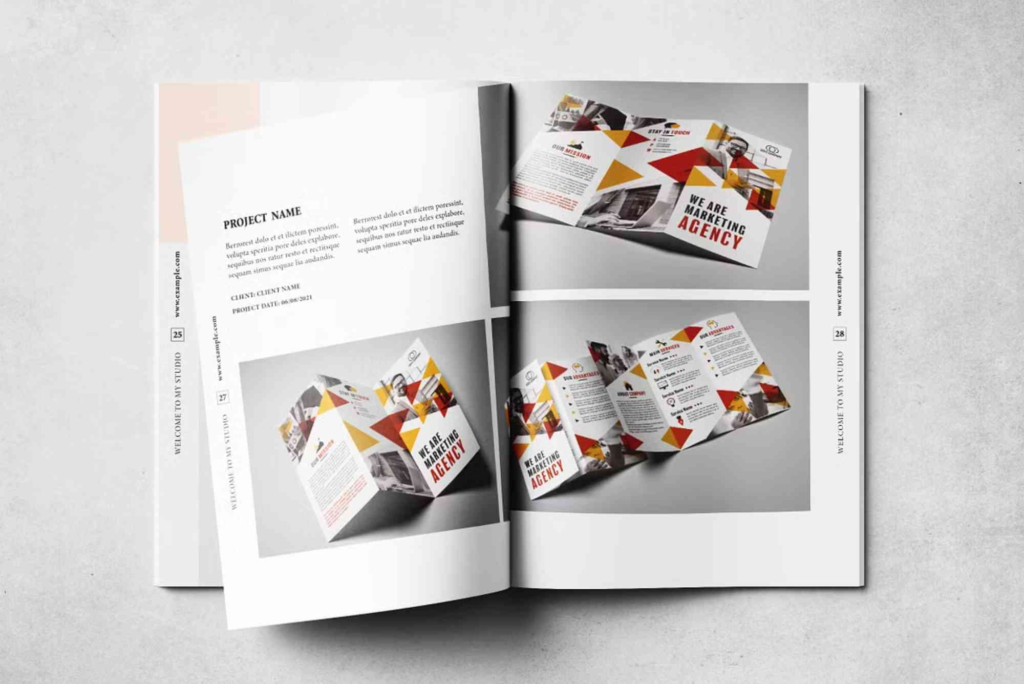
Booklet portfolios resemble small magazines and are easy to carry. They provide a narrative structure where each page or spread introduces a project. This style is ideal for branding and editorial designers, as it demonstrates layout skills in a real-world format.
Loose-Leaf or Binder Portfolios
A binder allows for flexibility, as projects can be swapped or updated easily. This is helpful for freelancers who need to tailor their portfolio for different clients. It also enables designers to showcase large-format work without shrinking it into a small book.
Hybrid Portfolios
Some designers combine printed materials with digital tools, such as QR codes linking to motion graphics or websites. This hybrid approach shows adaptability and demonstrates your ability to work across media.
Real-World Printed Graphic Design Portfolio Examples
When analyzing successful printed portfolios, one thing becomes clear: they are not about quantity but about quality. A portfolio with five excellent projects presented beautifully is more powerful than one with 20 average pieces.
For example, some designers create portfolios that look like branded annual reports. These mimic real-world business documents, which immediately resonate with corporate clients. Others craft portfolios that resemble coffee table books, appealing to artistic audiences. Some use unconventional approaches like fold-out posters or packaging-inspired designs to capture attention. If your design specialty involves retail or branding, incorporating elements of Custom Packaging into your portfolio design can make it more relevant and engaging.
How to Create Your Own Printed Portfolio
Designing your own printed portfolio requires planning and intentional design choices.
First, curate your best work. Select projects that represent your skills in branding, typography, packaging, or UI design. Show diversity but keep everything consistent in quality.
Next, decide on a format. A booklet works well for most designers, but if you want to stand out, consider creative alternatives such as foldable brochures or portfolio boxes.
Then, focus on the layout. Use grid systems to maintain order and balance. Typography should remain clean and professional, with enough hierarchy to guide the reader. Remember, white space is just as important as the visuals—it helps each project breathe.
Finally, collaborate with a quality print shop. Discuss paper choices, finishes, and binding methods. The tactile feel of your portfolio will leave as much of an impression as the visuals themselves.
Common Mistakes to Avoid
When creating a printed graphic design portfolio, certain mistakes can reduce its impact. Overcrowding pages with too many images makes the portfolio look unprofessional. Neglecting to proofread text can create a negative impression. Using inconsistent colours, fonts, or layout styles weakens the portfolio’s cohesion. Another mistake is forgetting the target audience. A portfolio designed for advertising agencies should look different from one intended for editorial publishing or packaging design.
Printed Portfolios vs. Digital Portfolios
Both printed and digital portfolios have their strengths. A digital portfolio is accessible anywhere, easy to update, and can reach a wider audience. A printed portfolio, on the other hand, is personal and tactile. It demonstrates craftsmanship and allows the interviewer to physically engage with your work. Many successful designers recommend maintaining both versions. Bring the printed version to interviews while including a digital one in follow-up emails or online applications.
Expert Packaging Design Inspiration
One overlooked aspect of printed portfolios is the opportunity to experiment with format and packaging. Instead of a traditional binder, some designers present their portfolios in custom-designed boxes, folders, or sleeves. This approach not only protects the contents but also becomes part of the portfolio itself. For more inspiration, you can explore professional packaging design tips that apply not just to products but also to how your portfolio is experienced. A portfolio presented in an elegant sleeve or creative container sets the tone before the viewer even opens it.
FAQs
What should a printed graphic design portfolio include?
It should include your best work, project descriptions, personal branding, and a professional layout. Quality over quantity is essential.
How many projects should be in a printed portfolio?
Most experts recommend 6–10 strong projects. Enough to showcase range, but not so many that it overwhelms the viewer.
What size should a printed portfolio be?
A4 or letter size works best for most portfolios. They are easy to carry and provide enough space for layouts and visuals.
Is a printed portfolio still relevant today?
Yes, especially in interviews or meetings. A physical portfolio leaves a stronger impression and demonstrates craftsmanship.
Should I include student work in my printed portfolio?
Yes, if it represents your skills and creativity. Many employers value strong student projects if they are presented professionally.
Make Your Portfolio an Experience
Printed graphic design portfolio examples prove that physical formats remain powerful tools for showcasing creativity. A thoughtfully crafted portfolio communicates more than just your skills—it communicates professionalism, attention to detail, and a unique design perspective. By choosing the right format, curating strong projects, and experimenting with layouts, you can turn your portfolio into an unforgettable experience.