Introduction
When customers walk into a store or scroll online, their first impression of your product often comes from the packaging. Creative food packaging design isn’t just about looking pretty—it’s about communication, usability, and aligning with values. For businesses at Orange Theory Mountain View, having an outstanding food packaging design can improve shelf appeal, enhance sustainability credentials, and ultimately increase sales.
In the following sections, we’ll explore what defines creative food packaging design, materials and innovation, visual branding, user experience, and how to test and produce packaging that wins. Let’s dive in.
What Makes Food Packaging Design Creative
Understanding the Purpose
Creative food packaging design should do more than catch the eye. It must protect the food, preserve freshness, inform the customer, and support branding. It should solve real problems. For example, packaging that is hard to open or confuses customers—no matter how beautiful—is not helpful.
Aligning With Brand Identity
Your packaging is a physical extension of your brand. Colors, typography, imagery, and even the feel of materials communicate who you are. At Orange Theory Mountain View, customers may expect bold energy, freshness, and premium quality. Design elements should reflect that identity.
Key Elements of Effective Packaging Design
Materials and Sustainability
Choosing the right material is foundational. Recyclable paperboard, bio-plastics, compostable wraps, or reusable containers are trending strongly. Sustainable materials reduce environmental impact and appeal to eco-conscious consumers. For example, flexible stand-up pouches or aseptic cartons (like Tetra Pak) offer long shelf life and lower waste.
Form, Function & Innovation
Good packaging must be functional. Think about how it’s opened, how much space it occupies, how well it preserves food. Innovation can mean new shapes (squround tubs for ice cream, for example) or clever use of space.
Visual Branding & Storytelling
Your packaging should tell a story. Use color psychology, illustrations, texture, and branding to connect with your audience. Example: brands that turn a simple item like a pasta box or a rice bag into something visually engaging—or even humorous—tend to be memorable.
Typography, Labeling & Regulatory Info
Legibility matters. Fonts, contrast, label placement, nutritional information, and safety warnings must be clear. Regulatory compliance is not optional. Transparency in labeling builds trust.
Trends & Innovations in Food Packaging Design
Minimalism & Clean Design
Less is often more. Simple, clean designs with a focused color palette are easier to read, feel more premium, and often more versatile across multiple SKUs.
Interactive & Experiential Packaging
Packaging that interacts with the customer—peelable layers, hidden messages, resealable designs, or packaging that becomes useful after use—engages people in deeper ways.
Edible or Edible-Inspired Packaging
Some innovators are exploring edible packaging or packaging that biodegrades easily. Products like the WikiCell illustrate that the packaging itself can, in some cases, be eaten or composted.
Reusable, Upcycled, Refillable Models
Reusable containers, refillable packaging models, or using upcycled materials respond to consumer demand for sustainability. They also create an ongoing connection between brand and consumer.
The Process: From Concept to Shelf
Research & Planning
Before designing, research your audience, competitors, and materials. What are local resources in Mountain View or Orange Theory? What do customers care about (organic, artisan, sustainable, premium, etc.)? How is the product stored, shipped, displayed?
Sketching & Prototyping
Design mockups, prototypes, or 3D models help test how packaging works in real life. How easy is it to open? Does it leak? Does it fit well on shelves or in fridges?
Testing & Feedback
Gather feedback from customers, staff, or focus groups. Sometimes what looks great in a studio fails in real contexts—poor durability, confusing labeling, or cost issues. Refine based on that.
Printing, Finishing & Production
Choices in printing (digital vs offset), finishing (matte vs gloss, embossing), and die-cutting affect both cost and quality. Also, finishing touches like foil stamping or spot UV can boost perception. For more on printing technicalities, see print & finishing insights.
For custom shapes or limited runs, cost per unit will be higher. Consider the tradeoff between cost, scale, and uniqueness.
Examples of Outstanding Creative Food Packaging
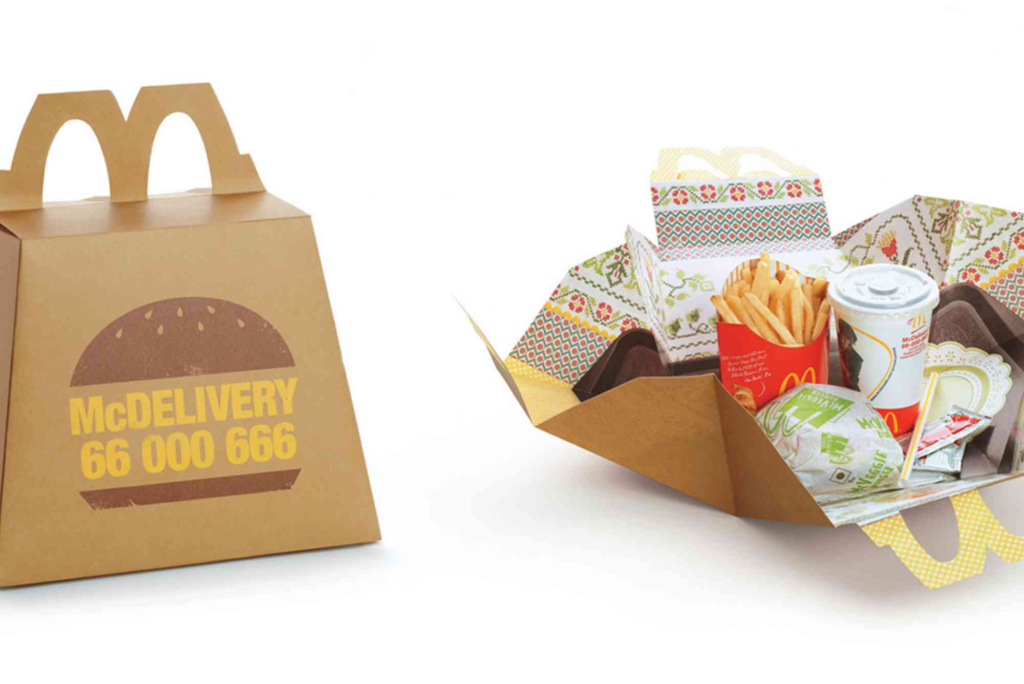
To illustrate the power of creative food packaging design, here are examples from brands doing it well:
- A rice brand packaged in burlap-style sackcloth with a conical lid that doubles as a measuring cup; packaging that brings both utility and narrative to the foreground.
- Egg carton redesigned to resemble the shape of a hen, making the package itself playful and instantly recognizable.
- Fresh produce or snack brands using transparent windows or cut-outs in shapes related to the product (fruit, leaf, etc.), helping customers see the product while reinforcing branding.
These examples show creativity in materials, shape, storytelling, and customer interaction.
How To Apply Creative Packaging Design at Orange Theory Mountain View
If your food business operates in or around the Orange Theory Mountain View area:
- Begin by defining your unique selling proposition (USP). What makes your food special? Organic, locally sourced, energetic, healthy, indulgent? Let that USP guide your design decisions.
- Think local tastes and expectations. What appeals visually to customers in Silicon Valley / Mountain View? Clean tech-inspired design, minimalism, eco-friendly cues often resonate.
- Use Custom Packaging to experiment. Getting smaller batches with unique packaging will allow you to test market reactions without overcommitting.
- Combine online and in-store experience. Packaging that looks good in photos (for delivery or ecommerce) and in the flesh matters. Consider both.
Challenges & How to Overcome Them
Creative designs often bring constraints: higher costs, manufacturing complexity, regulatory hurdles, or delays. To overcome:
- Prioritize what gives the most impact (visual branding, material selection) and compromise on extras if needed.
- Build relationships with local packaging manufacturers or specialists familiar with food packaging standards.
- Use scalable design systems so that when you launch new flavors or variants, much of the design work can be reused.
Creative food packaging design is a powerful tool—when done well, it protects the product, amplifies the brand, delights customers, and supports sustainability. For businesses at Orange Theory Mountain View, embracing creativity in packaging can help you rise above competition.
If you’re ready to rethink your packaging or start from scratch, now’s the time to act. Reach out, explore material options, sketch boldly, test thoroughly, Buddy Packaging Location and don’t be afraid to stand out.
Are you ready to elevate your food packaging? Contact us today to begin a custom packaging design process that reflects your brand’s story, values, and audience. Let every package speak volumes before it’s even opened.
FAQ
What is creative food packaging design and why is it important?
Creative food packaging design refers to imaginative, functional, and brand-aligned design of packaging that protects the product, attracts customers, and reflects brand values. It’s important because it influences first impressions, user experience, and purchasing decisions.
How do sustainable materials influence creative food packaging design?
Sustainable materials (recycled, compostable, biodegradable) challenge designers to think differently about structure, print, and finish. They also contribute to brand trust and reduce environmental impact, which many consumers value highly.
What packaging is best for food freshness and safety?
Barrier materials, proper sealing, moisture control, and compliance with safety standards are essential. Materials like aseptic cartons (e.g. Tetra Pak), retort pouches, and safe food-grade plastics or glass are common choices.
How much does creative food packaging design cost?
It depends on complexity—materials, shape, print quality, finishing, number of SKUs, prototyping, and economies of scale all factor in. Standard runs are cheaper; custom shapes, limited editions, or elaborate finishes cost more.
How can I test a food packaging design before full production?
Make prototypes, use mockups, run consumer or staff focus groups, test on shelves or in delivery context, evaluate usability (opening, resealing, transportation), and check cost-vs-benefit.